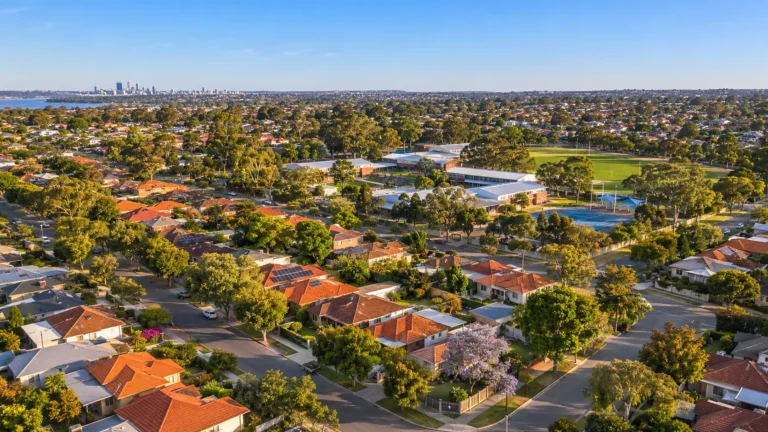
The Perth rental market is tight. REIWA reports a median house rent of $750 a week and a median unit rent of $700 in October 2026, with a vacancy rate of 1.7% in September. REIWA calls 2.5% to 3.5% balanced, so tenants face stiff competition and landlords can usually lease quickly.
That is the short version. Below you will find the latest numbers, why the market is so tight, what rents look like in Perth’s southern suburbs, and what it means whether you rent or own an investment property. We also cover the WA tenancy rules that apply today. Figures are as reported in early November 2026, and we flag where a number may change.
What is the Perth rental market doing right now?
Three numbers tell most of the story. Rents are at record highs, vacancy is low, and homes lease fast. Here is what REIWA (the Real Estate Institute of Western Australia) and its rental vacancy page reported:
- Median rent: $750 a week for houses and $700 for units in October 2026. House rents were up 7.1% on a year earlier. Units were up 4.5%.
- Vacancy rate: 1.7% in September 2026, down from 1.9% in August and 2.2% in July.
- Rentals on offer: 2,144 properties were listed for rent on reiwa.com at the end of October 2026. That is 10.5% more than September, and only 3.9% more than a year earlier.
- Time to lease: a median of 15 days in October 2026, one day slower than September.
A vacancy rate is the share of rental homes with no tenant. REIWA works it out by dividing vacant rentals by all rentals, based on a survey of its members. Because it is a survey, the final figure takes two to three weeks to settle after each month ends.
Stable rents do not mean an easier market. In its September 2026 quarter report, REIWA said median rents held steady over the quarter but remain at record highs, and it described rental affordability as at a record low.
Why is the Perth rental market so tight?
When fewer homes are available than people want, rents rise and homes lease quickly. That is what a vacancy rate well under the balanced range of 2.5% to 3.5% looks like in practice. At 1.7%, there is little spare supply.
REIWA points to supply as the main pressure. It says existing investors are continuing to leave the rental market, which removes homes tenants might otherwise rent. The number of properties listed for rent also stayed close to last year’s level, even though the number of homes for sale grew sharply. In October 2026 REIWA counted 9,129 active sale listings, against 2,144 rentals.
This matters because the two markets feed each other. Some investors may sell rather than keep a home as a rental, and some renters may stay in the rental market for longer while prices and borrowing costs stay high. On 3 November 2026 the Reserve Bank of Australia (RBA) raised the cash rate target by 0.25 percentage points to 4.85%, after a 6 to 3 board vote. Higher rates add to the cost of owning an investment property, and they may keep more people renting for longer.
We cannot say how these forces will balance out. They are the pressures to watch, and each can change quickly.
What do rents look like in Perth’s southern suburbs?
City-wide medians hide a lot of variation. Rents in our part of the southern corridor differ by suburb, property type and bedroom count. These are the latest REIWA suburb figures, based on leases reported as at 8 November 2026:
- Willetton: median rent of $877 a week for houses and $725 for units.
- Leeming: median rent of $950 a week for houses. REIWA lists no separate unit median.
- Lynwood: median rent of $765 a week overall.
Treat suburb medians as a guide only. In smaller suburbs a handful of leases can move the figure, and a renovated four-bedroom home near a good school will not rent like a tired two-bedroom one. For a single property, recent leases on similar homes nearby are a better guide than any headline number. We also covered how local sales evidence works in our Lynwood property market update.
What does the Perth rental market mean for tenants?
If you are renting, speed and preparation matter more than they used to. A median of 15 days to lease means good homes can go within a fortnight of listing.
- Get your paperwork ready before you inspect. Have ID, proof of income and references in one folder, so you can apply the same day.
- Know your budget ceiling. Rents above your comfort level are a poor bet in a market with little room to negotiate.
- Apply for more than one home. With a vacancy rate under 2%, a single application often is not enough.
- Ask for a fixed rent in writing. WA bans rent bidding, so a listing should show one price, and you should not be pushed to offer more.
- Check the rent increase rules. Once you are in, increases are limited, as explained below.
What does the Perth rental market mean for landlords?
Low vacancy is good news for landlords on the face of it. Homes are leasing fast, and rents have risen. But a strong market is not a reason to skip the basics.
Price from evidence, not from headlines
Setting rent too high can leave a home empty for weeks, which wipes out the gain. Compare your home with recent leases nearby that match on bedrooms, condition and features. A good agent will show you those leases rather than quote a number from the air.
Check your yield and your costs
Gross rental yield is the yearly rent as a percentage of the property’s value. It ignores costs such as rates, insurance, repairs and management fees, so it is a starting point only. As a rough illustration, using REIWA’s October 2026 Perth medians, a $750 weekly house rent over a year is $39,000. Against a median house price of $970,000, that is a gross yield of about 4.0%. For units, $700 a week is $36,400 a year, which is about 5.2% of a $700,000 median price. These are our own calculations from REIWA’s published medians. They compare two medians, not a single property, so they are indicative only.
With the cash rate now 4.85%, many owners will be weighing that yield against loan repayments. A lender or accountant can tell you what it means for your situation.
Keep a good tenant
In a tight market, a reliable tenant who pays on time is worth more than squeezing the last $10 a week. Regular maintenance and a fair, well-timed rent review help tenants stay longer, and that avoids vacancy and re-letting costs.
Think about your next step
Some owners are weighing up whether to keep renting out a home or sell it while buyer demand and values are high. Neither answer is right for everyone. If you are unsure, a no-obligation conversation can help. You can ask Team Gourav & Shan about rental management and leasing, or request a free appraisal to see what your home might achieve on the market. Our guide to how much your house is worth in Perth explains how that works.
Which WA tenancy rules apply today?
The Residential Tenancies Act 1987 sets the rules for most rentals in WA. WA Consumer Protection’s rent reforms page lists the main changes already in force:
- Rent increases: only once every 12 months. The page says this applies to periodic agreements from 29 July 2024, with different timing for some older fixed-term agreements.
- Notice: a rent increase needs at least 60 days’ written notice on Form 10, except where rent is based on the tenant’s income.
- Pets: tenants must ask permission, and landlords can refuse on reasonable grounds. Some refusals need the Commissioner’s approval.
- Minor modifications: small changes are allowed in most cases with permission, and landlords cannot unreasonably withhold consent.
- Disputes: the Commissioner for Consumer Protection can decide pet and modification disputes, instead of the courts.
That page was last updated in August 2024, so confirm the current rules with Consumer Protection before you act. Rules on rent bidding and other points sit in the Act and its amendments.
A second round of changes is being developed. In a decision paper published on 30 April 2026, Consumer Protection proposed minimum standards for rental homes, more information for applicants, and changes to the grounds for ending a tenancy. These are proposals. The paper does not say they are law, and we could not confirm a start date. See the Department’s Residential Tenancies Act review page for updates.
Where is the Perth rental market heading?
Nobody can promise where rents go next. REIWA said in October 2026 that rents still have the potential to rise 5% to 10% over calendar 2026. That is a forecast, not a guarantee, and it was made before the 3 November rate rise. REIWA has also said it opposes rent caps and freezes, arguing they do not add supply. Others disagree, and the policy debate is ongoing.
What we can say is what the data shows today. Vacancy has fallen every month from July to September, listings are limited, and homes are leasing in about two weeks. If supply improves, vacancy would rise and the pressure on rents would ease. We will update this guide when the next REIWA figures arrive.
Frequently asked questions about the Perth rental market
REIWA’s October 2026 median is $750 a week for houses and $700 for units. Medians are the middle value, so half of leases are cheaper and half are dearer. Rents vary widely by suburb and bedroom count. Willetton houses had a median of $877 a week and Leeming houses $950, per REIWA’s suburb pages as at 8 November 2026.
REIWA reported 1.7% for September 2026. That was down from 1.9% in August and 2.2% in July. REIWA describes a rate of 2.5% to 3.5% as a balanced market, so 1.7% is a tight one. REIWA’s figures are survey-based, so check its vacancy page for the latest month.
At current vacancy levels, it favours landlords on speed and rent. With a 1.7% vacancy rate and homes leasing in a median of 15 days, tenants have less choice and less room to negotiate. That can change if more rentals come to market.
Once every 12 months. Consumer Protection says this applies to periodic agreements from 29 July 2024. Some fixed-term agreements signed before that date follow the old rule until the term ends. Check your own agreement.
At least 60 days, in writing. Consumer Protection says the notice goes on Form 10 and must show the new amount and the date it starts. Different rules apply where rent is based on the tenant’s income.
Yes, with the landlord’s permission. Landlords can refuse on reasonable grounds, and some refusals need the Commissioner’s approval. They can also set reasonable conditions and claim pet damage from the pet bond. Disputes go to the Commissioner.
A median of 15 days in October 2026, per REIWA. That is one day slower than September and one day faster than October 2025. Well-priced, well-presented homes often go faster, and overpriced ones take longer.
What should you do next?
The numbers point one way for now: little supply, record rents and quick leasing. That helps landlords on price and speed, and it makes life harder for tenants, so preparation matters on both sides. The picture is also shifting, with a rate rise just landed and new tenancy rules under discussion. Look at the next REIWA release before you make a big decision.
If you own a Perth home and are weighing up renting it out, selling it, or doing something in between, we are happy to talk it through. Contact Team Gourav & Shan at Harcourts Focus in Bull Creek through our contact page, request a free appraisal, or read more about the team. You can also browse current properties.
Last reviewed 9 November 2026. Figures are from REIWA, the RBA and WA Consumer Protection as at the dates stated and may have changed. This article is general information only. It is not legal, tax, financial or investment advice. Please speak to a lender, accountant or conveyancer, and check current rules with WA Consumer Protection, before making decisions.